Introduction
Automotive silicone hoses are indispensable for a vehicle’s fluid and gas transfer systems, outperforming standard rubber hoses with superior heat resistance, corrosion protection and flexibility. The harsh under-bonnet environment demands hoses that match the specific functional needs of each vehicle system—from pressure resistance to chemical compatibility.
1. Engine Cooling System: The Primary Use for Silicone Coolant & Radiator Hoses
Engine cooling systems rely on automotive silicone hoses to circulate coolant and prevent overheating—this is the most common and vital application for silicone hose in any vehicle. The system requires hoses that resist coolant corrosion, stand up to continuous high temperatures and avoid collapse under vacuum pressure.
Specifically, silicone radiator hose fit perfectly at cooling system corners (e.g., between the radiator and engine block), with 3–4 reinforcement layers and ID 11mm–102mm for tight engine bay spaces.
A 5 8 silicone heater hose—a customisable option from stdrubberhose—is the standard size for heater core connections, with a 4-ply polyester reinforcement and -54℃ to +200℃ heat resistance for efficient warm coolant transfer.
These silicone coolant hoses and radiator hoses are compatible with all automotive coolants and resist cracking or ageing during long-term high-temperature operation, ensuring the cooling system runs reliably.
2. Intake System: High-Performance Silicone Intake Hoses for Airflow & Turbocharged Engines
The intake system’s role is to deliver clean, pressurised air to the engine—especially critical for turbocharged petrol and diesel vehicles. It needs silicone hose products that handle airflow pressure fluctuations, high turbocharger temperatures and engine vibration without losing airtightness.
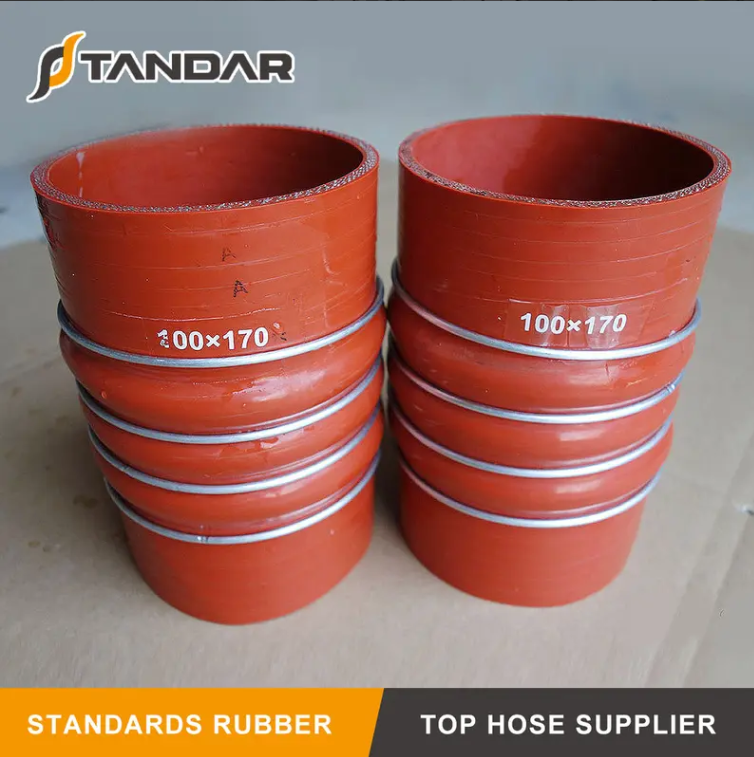
Silicone intake hose: the high-temperature nylon steel wire braided reinforced hump silicone hose couplers is the ideal choice for refrigerant transfer, with a 4mm thin wall for lightweight installation and superior sealing to prevent refrigerant leaks. It has a -54℃ to +200℃ temperature range, resists refrigerant chemical corrosion and is compatible with all common automotive AC refrigerants.
Custom silicone air duct connecting hoses are also offered for AC evaporator and vent connections—these highly flexible hoses bend easily into tight engine bay spaces, with a smooth inner surface to reduce airflow resistance and custom colour options for easy identification among other under-bonnet components.
3. Hydraulic System : High-Pressure Resistant Automotive Silicone Hoses
The hydraulic system (power steering and braking) is the backbone of a vehicle’s safety, requiring automotive silicone hoses with extreme pressure resistance, oil resistance and vibration protection. These hoses transfer hydraulic fluid for steering and braking, so any failure could lead to loss of control—making robust, purpose-built silicone hose non-negotiable.
high-pressure steel wire braided silicone hose is designed for power steering and brake fluid transfer, with a steel wire braided reinforcement layer and a burst pressure of ≥1.2Mpa (meeting SAE J20R3 standards). It has a -54℃ to +220℃ temperature range and resists corrosion from brake fluid and power steering oil, ensuring stable hydraulic transmission.
For heavy-duty commercial vehicles, custom fluorosilicone-lined silicone automotive hoses are available— the fluorosilicone inner layer boosts oil resistance, while the outer silicone layer maintains flexibility and heat resistance, solving the high-demand hydraulic system challenges of trucks and engineering vehicles.
4. Exhaust System
While the exhaust system’s main pipes are metal, automotive silicone hoses play a key role in auxiliary heat dissipation and gas transfer (e.g., exhaust bypass valves and EGR systems).
Stdrubberhose’s aramid braided reinforced silicone hose is the perfect fit for exhaust system applications, with an aramid reinforcement layer that delivers a -54℃ to +260℃ temperature range and resists corrosion from harmful exhaust gases. It can withstand intermittent high temperatures of up to 300℃—a critical feature for exhaust bypass and EGR systems.
These hoses are highly durable and vibration-resistant, ensuring the exhaust system’s auxiliary components operate reliably even under the extreme heat and vibration of continuous vehicle use. They extend the overall service life of the exhaust system and reduce maintenance needs.