Replacing fuel injector is a significant maintenance task that demands careful preparation to avoid costly mistakes, safety hazards, and poor performance.
1. Confirm Faults and Trace Root Causes: Avoid Blind Replacement
Before investing in new fuel injectors, it is critical to verify that the injectors themselves are faulty—many symptoms often stem from worn auxiliary components, not the injectors. Common signs of bad fuel injectors include rough idling, sharply increased fuel consumption, reduced acceleration, and excessive emissions, but these can also be caused by a cracked fuel line, leaking fuel line quick connector, or blocked leak off pipe connector (such as the 6C1Q9K022AG model compatible with Denso injectors).
Start with simple self-tests to narrow down the issue: inspect leak off pipe and connectors for fuel seepage, press the pneumatic coupling to ensure smooth air flow, and use a fuel injector cleaner to temporarily flush nozzles—if performance improves, cleaning may suffice instead of replacement. For accurate diagnosis, use an OBD scanner to read injector-related fault codes (e.g., P0201-P0204) and conduct a common rail pressure test (1600–2000bar) for Common Rail Fuel Injectors.
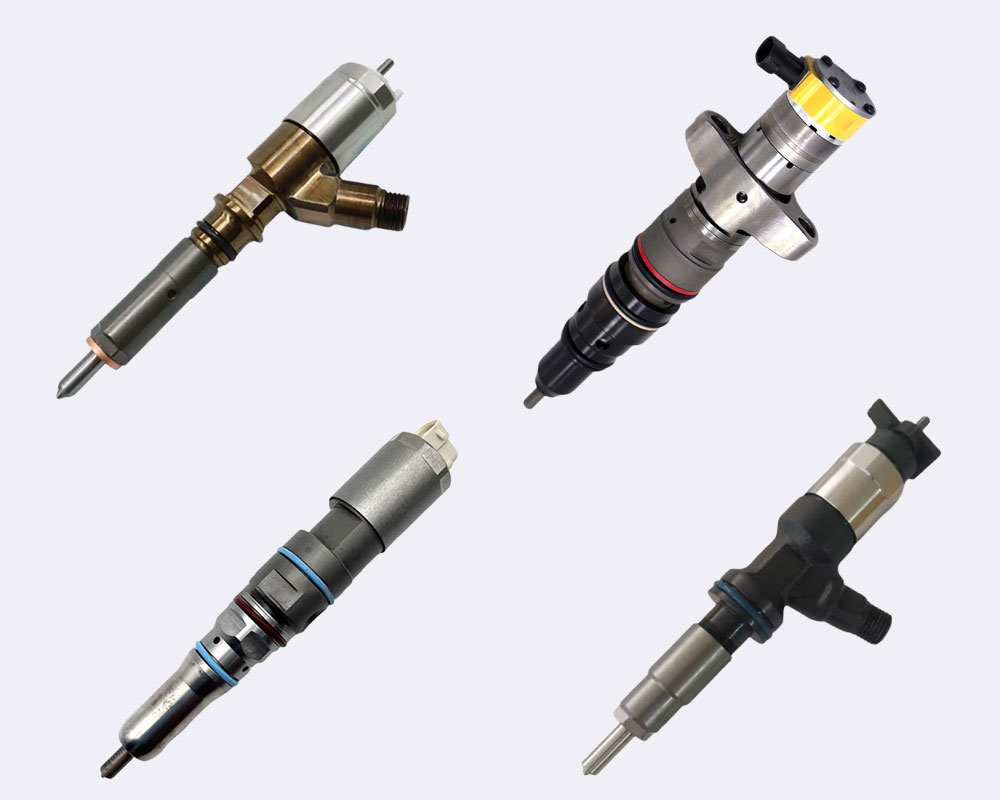
2. Ensure Part Compatibility and Quality: Precise Matching
2.1 Lock Injector Models: Three Compatibility Principles
• Check the vehicle’s VIN or engine code
• Cross-reference the old injector’s OEM number: Ensure the new injector matches exactly—Shijiazhuang Standards Rubber’s product listings include clear model compatibility information.
• Verify synergy with auxiliary parts: Confirm the injector works with Shijiazhuang Standards Rubber’s fuel lines and connectors (e.g., the 474010052R fuel pipe for Renault Megane III).
2.2 Must-Replace Accessories: Complete Set Preparation
Replace these worn parts during injector replacement to avoid future issues:
• Fuel lines: Choose model-specific options made from wear-resistant, fuel-resistant rubber
• Fuel line quick connectors: Opt for 6mm/8mm/10mm nylon variants or SAE J2044-compliant models for tight sealing.
• For commercial vehicles (e.g., HINO trucks) or construction machinery, add a hydraulic hose and pneumatic coupling to the preparation list—these parts endure harsh conditions and support injector performance.
2.3 Quality Inspection
• Check certifications: Ensure fuel injectors and accessories carry ISO 9001, SGS, or FDA certifications
• Inspect details: No scratches on injector nozzles, intact locking mechanisms on connectors, and no cracks in fuel lines.
3. Complete Intelligent Pre-Adaptation: Prepare for ECU Compatibility
Modern engines require ECU synchronization with new fuel injectors—a step often overlooked but critical for optimal performance. Shijiazhuang Standards Rubber’s match-flowed fuel injectors come with specific compensation codes (format: first two digits of the connector + 26 zeros + last two digits; e.g., 180000000000000000000000000018 for 2013 Toyota Hilux) that must be entered into the ECU. Take advantage of the company’s free pre-coding verification: provide your vehicle model and engine code to the technical team before installation to avoid code rejection.
For late-model vehicles (e.g., Toyota 1KD Hilux/Prado, Volvo FH), an injection pilot relearn is also required.
4. Prepare Scenario-Specific Tools and Environment
Tailor your tools and setup to the vehicle type to streamline the replacement process and minimize risks. For general use, gather an injector removal kit and torque wrench (calibrated to OEM specs, e.g., 35N·m for CAT C9 engines). For added efficiency, use Shijiazhuang Standards Rubber’s specialized tools: a fuel line cutter (for 6mm/8mm/10mm nylon pipes) and quick connector installation tool (prevents deformation during fitting)—both available on the company’s website.
Finally, prepare for after-sales support: confirm the company’s 30-day no-return policy for unused fuel injectors and 12-month warranty for manufacturing defects, and save contact details for 24/7 remote guidance on coding or troubleshooting.
5. Final Checks and Conversion Guidance
From fault diagnosis and safety preparation to component matching, pre-adaptation and tool environment setup, these steps are interconnected to help you successfully replace diesel fuel injectors.Our OEM-compatible fuel injectors, Common Rail Fuel Injectors, durable fuel lines and fittings are all backed by quality and after-sales service. For personalised support, feel free to contact us. Whether you are performing diesel injector repair or a full replacement, parts—including direct links to key products like fuel line connectors. Whether you’re performing diesel injector repair or a full replacement,Shijiazhuang Standards Rubber Products Co., Ltd products and technology are an excellent choice.