For small garages, the core demand for injector cleaning lies in balancing three factors: cleaning effectiveness, service efficiency, and cost control.
1. Key Indicators for Choosing This Cleaning Method
Small garage technicians should first judge whether to adopt this efficient cleaning method based on the following indicators when receiving vehicles with injector problems:
Vehicle Performance Indicators | Clogging Severity Judgment | Recommended Cleaning Method |
Significant increase in fuel consumption, obvious rough idling, weak acceleration (no misfire) | Moderate clogging | This efficient cleaning method |
Occasional engine hesitation during acceleration, slight exhaust smoke, poor cold start | Near-severe clogging | This efficient cleaning method (strengthen solvent circulation time) |
Frequent misfires, inability to start, excessive exhaust emissions (failed inspection) | Severe clogging | Professional removal cleaning |
Minor rough idling, slight fuel consumption increase | Mild clogging | DIY non-removal cleaning (cost-saving for customers) |
2. Required Equipment and Materials for Efficient Cleaning
The specific list is as follows:
Compact professional fuel injector cleaning machine (supporting common rail systems, with adjustable pressure and flow rate.
High-efficiency diesel fuel injector cleaning solvent (suitable for moderate to heavy carbon deposits, with corrosion protection to avoid damaging injector components).
Universal fuel rail connection adapter set (compatible with mainstream vehicle models, avoiding the need to purchase model-specific adapters).
Pressure gauge (to monitor fuel system pressure during cleaning, ensuring operational safety).
Professional tool set (including wrenches, pliers, and lint-free cloths for connecting pipelines and cleaning components).
Protective equipment (gloves, goggles, and anti-static mats to ensure operational safety).
3. Step-by-Step Efficient Cleaning Process
Step 1: Vehicle Inspection and Preparation
First, conduct a simple test on the vehicle: start the engine to check for idling stability, acceleration response, and exhaust status, and confirm the clogging severity according to the indicator table above. Then park the vehicle on a flat ground, turn off the engine, and let it cool for 10–15 minutes (no need for full cooling, improving efficiency). Disconnect the negative electrode of the battery and install an anti-static mat to avoid electrical hazards.
Step 2: Connect the Cleaning Machine to the Fuel Rail
Locate the fuel rail of the vehicle (refer to the vehicle maintenance manual for positions of different models). Disconnect the fuel inlet pipe of the fuel rail, and use a universal adapter to connect the outlet of the compact fuel injector cleaning machine to the fuel rail. Connect the return pipe of the cleaning machine to the vehicle's fuel return system to form a closed circulation loop. Ensure all connections are tight to avoid fuel leakage during cleaning.
Step 3: Configure Cleaning Solvent and Set Machine Parameters
Pour the high-efficiency cleaning solvent into the cleaning machine's liquid storage tank (follow the ratio of 1:1 for solvent and distilled water if the machine requires dilution). According to the vehicle's fuel injector model (e.g., 1K0213640 common rail diesel fuel injector), set the cleaning machine's pressure (recommended 25–35 MPa) and flow rate (5–8 L/h) to match the fuel system parameters of the vehicle, avoiding excessive pressure that damages the fuel rail.
Step 4: Circulation Cleaning and Real-Time Monitoring
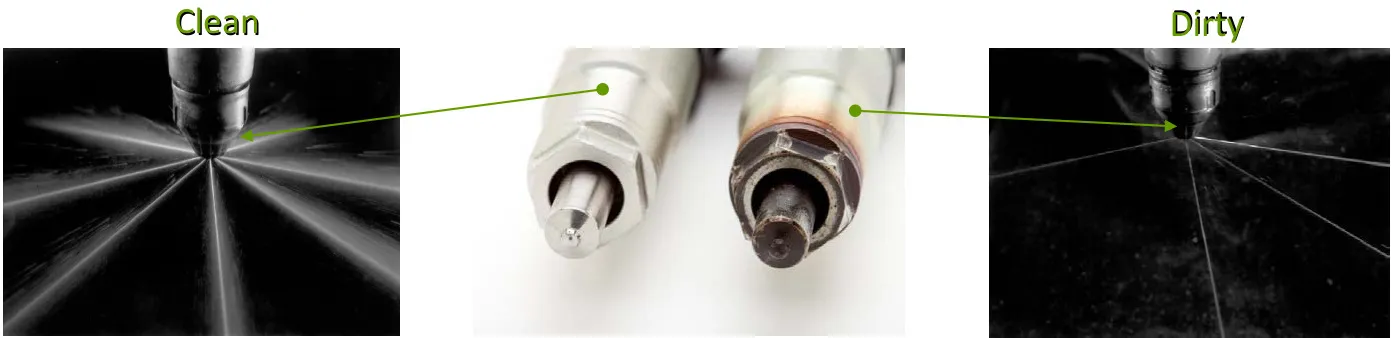
Turn on the cleaning machine and start the circulation cleaning process. For moderate clogging, set the cleaning time to 20–25 minutes; for near-severe clogging, extend it to 30–35 minutes. During the cleaning process, use a pressure gauge to monitor the system pressure in real time, and observe the solvent color (the solvent will gradually turn black as carbon deposits are dissolved). If the pressure is abnormal or the engine has abnormal noise (if the engine needs to be started during partial cleaning), stop the machine immediately for inspection.
Step 5: Post-Cleaning Residual Treatment and Reconnection
After the cleaning time is up, turn off the cleaning machine. First, open the residual liquid valve to discharge the used solvent in the pipeline. Then use clean distilled water to flush the cleaning machine and connecting pipelines to avoid residual solvent affecting the next use. Disconnect the cleaning machine and adapters, reconnect the original fuel inlet pipe of the fuel rail, and tighten the connections. Reconnect the battery's negative electrode.
Step 6: Post-Cleaning Test and Customer Communication
Start the vehicle and let the engine idle for 5–8 minutes to allow the fuel system to return to normal pressure. Test the idling stability, acceleration response, and exhaust status again to confirm that the cleaning effect meets the requirements. If the customer's vehicle has a fuel filter that needs to be replaced (usually recommended to replace after injector cleaning), remind the customer and provide replacement services. Finally, record the cleaning process and vehicle status for subsequent after-sales tracking.
4. Cost Control and Efficiency Improvement Tips for Small Garages
For small garages, reasonable control of costs and improvement of service efficiency can significantly increase profits. The following targeted tips are provided:
Purchase equipment in batches: When purchasing fuel injector cleaning solvents and adapters, choose bulk purchases to obtain preferential prices and reduce single-service material costs.
Standardize the process: Train technicians to master the standard cleaning process, reduce operational errors and rework, and improve the per capita service efficiency (it is recommended to complete 3–4 vehicles per technician per day).
Combine services: When providing injector cleaning services, combine them with fuel filter replacement, fuel line connector inspection, and other small maintenance items to increase single-service revenue.
Equipment maintenance: Regularly maintain the compact cleaning machine (such as cleaning the liquid storage tank, checking pipeline aging) to extend its service life and reduce equipment replacement costs.
5. Recommended Cost-Effective Products for Small Garages
We provide a series of cost-effective common rail diesel fuel injectors, cleaning equipment, and accessories that are suitable for small garage operations. All products have passed strict quality inspections, ensuring reliability and durability while maintaining competitive prices. Recommended products for small garages are as follows:
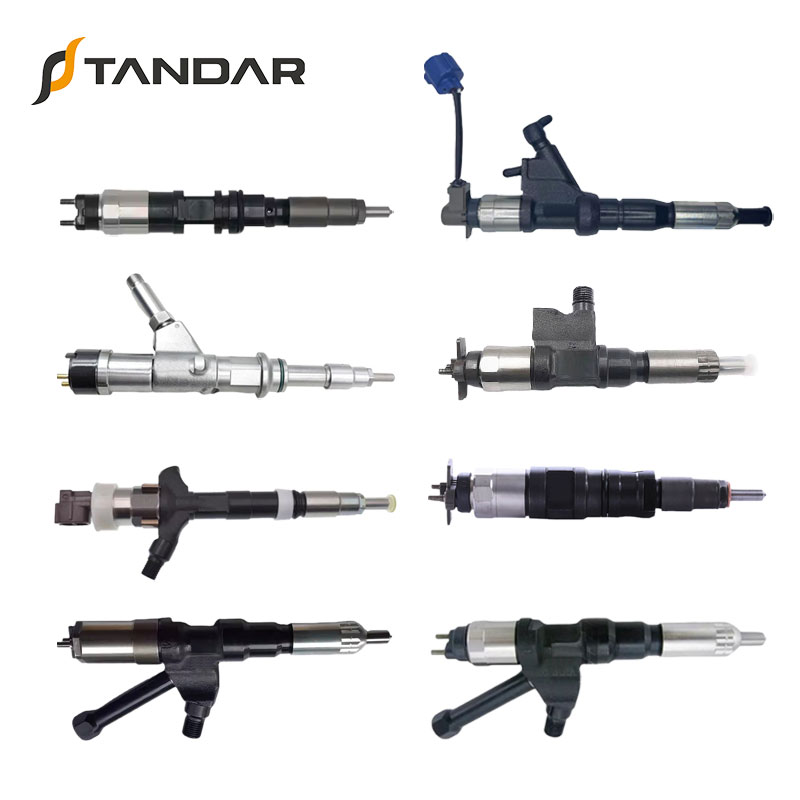
• 1K0213640 Vehicle Parts Common Rail Fuel Injector (universal model for multiple brands)
• Universal Fuel Rail Connection Adapter Set (compatible with mainstream models)