I. Quality First – Four Core Elements
Price is not the sole consideration. Below are the key dimensions for evaluating diesel engine parts suppliers and product quality, as well as the core production standards followed by professional parts manufacturers:
1. High-Quality Materials & Precision Manufacturing
a. Material Selection: High-quality fuel injectors are made of heat-treated high-performance alloy steel for excellent wear resistance. High-pressure Fuel Lines are constructed from virgin PTFE and high-quality steel wire braiding; seals use premium oil-resistant materials (e.g., fluororubber); Silicone Hoses and Rubber Hoses all meet industrial-grade temperature and pressure resistance standards.
b. Manufacturing Precision: Key details to check – sealing surfaces must be smooth and defect-free; threads must be clear and burr-free. Leak off Pipes, Air Compressor Pipes, and similar products undergo precision processing to ensure sealing performance and service life; stricter control is required for Thermostat assembly precision.
2. Strict Factory Testing & Quality Control
Reputable manufacturers conduct 100% factory testing on all products: Fuel injectors must pass flow, opening pressure, and sealing tests; Fuel Injector System Components and Quick Connectors undergo multiple rounds of pressure resistance and leakage tests. Complete test reports and quality certifications are available to ensure confidence in procurement.
3. Compliance with Authoritative Certifications & Industry Standards
Products must meet or exceed international industry standards such as SAE, DIN, and ISO – these are the core guarantees for product performance and dimensional compatibility. The entire range of industrial engine parts is certified to these standards; whether it is high-pressure fuel lines, fuel injector parts, or automotive hoses, they are fully compatible with original equipment (OEM) to avoid adaptation risks.
4. Comprehensive Packaging & Traceable Labeling
Products from formal manufacturers come in high-quality packaging, clearly marked with product numbers, OEM compatibility codes, production batches, and traceability codes. All parts use standardized packaging; production information for each batch can be queried via the traceability code, reflecting both brand strength and a commitment to quality.
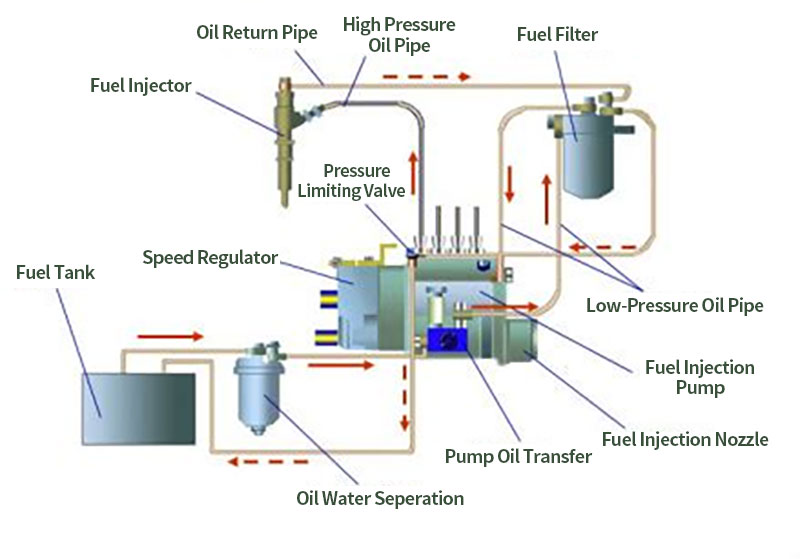
Diagram: Overall Structure of Fuel System
II. OEM Part Numbers – The "Unique ID" for Parts
The most accurate and reliable way to ensure part compatibility is to use OEM part numbers – this is also the core basis for professional suppliers to provide precise matching services:
1. How to Obtain OEM Numbers
a. Refer to the equipment’s technical manual or the label on the original part;
b. Record the engraved OEM number when removing old parts;
c. If in doubt, take photos and send them to the supplier for verification.
2. Avoid the "Universal Parts" Trap
a. Core components such as high-pressure fuel injectors and fuel pumps must use original or fully equivalent OEM parts;
b. Universal parts often fail to meet the original design requirements for pressure, flow, and durability, which may lead to secondary failures.
III. Supplier Selection – Comprehensive Evaluation Beyond Price
Evaluation Dimensions | Key Focus Areas | Verification Methods |
Technical Support | Whether the supplier has an experienced engineering team to provide system diagnosis and supporting solutions | Request technical service cases; verify on-site technicians’ qualification certificates |
Quality Stability | Whether the production process is fully monitored; whether product batch consistency meets standards | Request quality control reports and sampling records |
Inventory & Logistics | Whether key parts have a safety stock of over 30 days; whether delivery time can be controlled within 48 hours | Inquire about inventory reports; understand the coverage of logistics networks |
After-Sales Service | Warranty period; availability of on-site replacement; provision of technical training | Review after-sales policy documents; refer to customer reviews |
Compliance Certifications | Whether the supplier holds ISO 9001, ISO 14001, and industry-specific certifications | Verify the authenticity of certificates (via certificate numbers) |
IV. Common Faults & Part Selection Guidelines
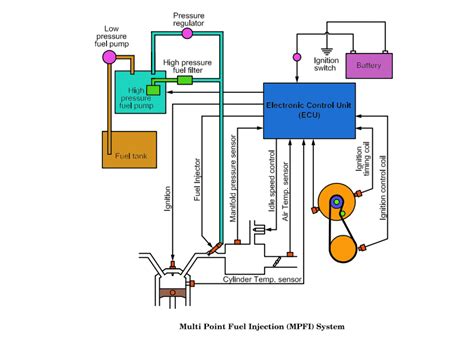
Fault Phenomenon | Possible Causes | Recommended Part Selection Guidelines |
Uneven Fuel Injection | Internal wear of fuel injector; aging of seals | Choose original or equivalent OEM fuel injectors; confirm O-ring material is fluororubber |
High-Pressure Leakage | Loose high-pressure line joints; pipe wall corrosion | Use steel wire-braided PTFE composite pipes; joints must comply with SAE specifications |
Increased Fuel Pump Noise | Internal bearing wear of the pump; seal failure | Replace high-pressure pumps matching the original engine model; ensure the pump body is made of high-strength alloy steel |
System Pressure Fluctuations | Pressure sensor failure; pressure regulator malfunction | Choose pressure sensors certified to ISO 9001; pressure regulators must pass pressure cycle tests |
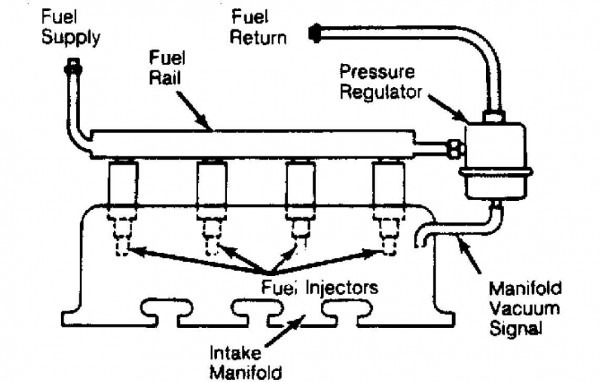
Fuel injection system
V. Conclusion: Choose a Professional Partner to Power Your Equipment Reliably
Selecting fuel system parts for industrial engines is a critical decision that affects equipment availability, operating costs, and long-term reliability. Professional parts manufacturers are not just part sellers – they are your most trusted partners in the fuel system field. They focus on high-pressure fuel lines, fuel injector system components, automotive hoses, and other products, strictly controlling the entire process from raw materials to manufacturing and testing to ensure products meet the rigorous standards of industrial applications.
VI. Call to Action – Get a Precise Part Solution Quickly
No need to struggle with finding a reliable "heavy duty engine parts supplier," "reliable fuel injectors manufacturer," or "industrial rubber hose supplier" anymore! Visit our product page now (https://www.stdrubberhose.com/products.html), send us your OEM part number or equipment model, and our professional team will provide you with one-stop procurement services from selection to delivery.
Whether you need Leak off Pipes, Fuel Lines, Quick Connectors, Fuel Injectors System Components, Silicone Hoses, or other products, we can match you with the highest-quality, most compatible solutions to ensure your equipment operates continuously and stably, creating greater value!